
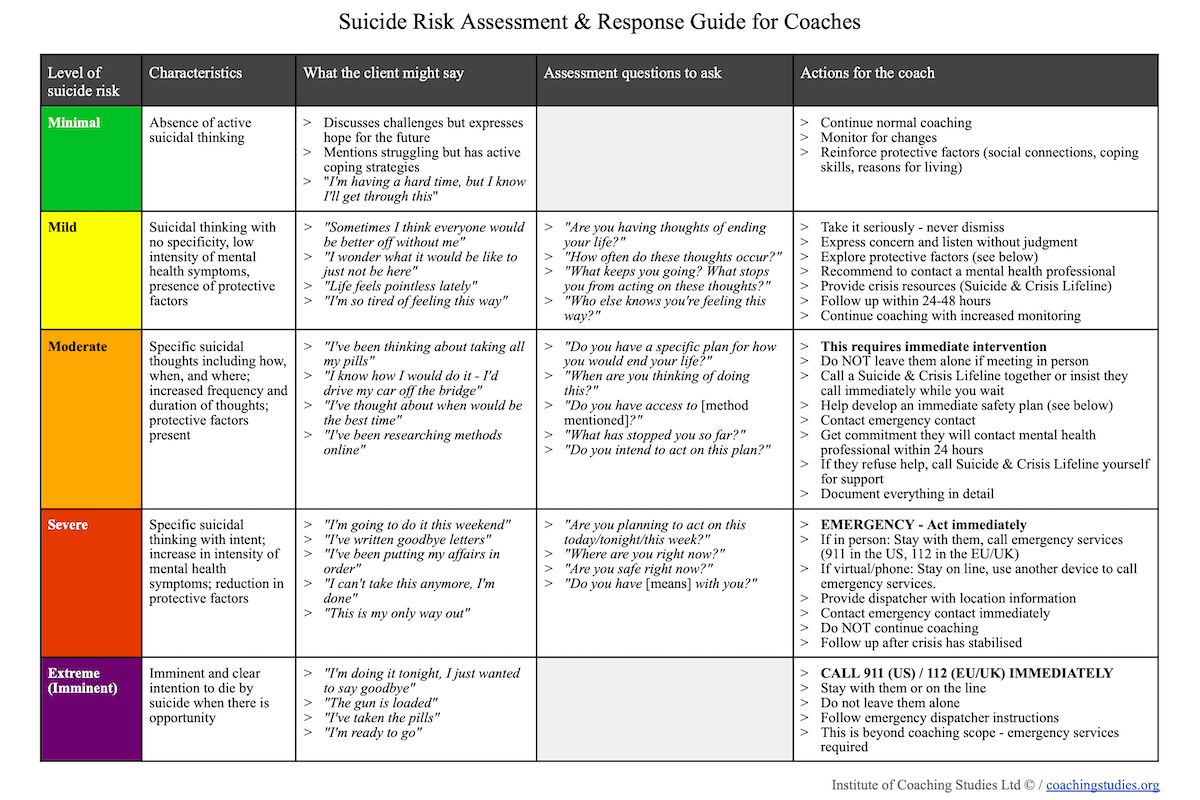
As coaches, we enter into intimate conversations with our clients about their lives, challenges, and deepest concerns. Within this space, we may encounter clients who express thoughts of self-harm or suicide. While these situations are relatively rare in coaching practice, they require immediate and appropriate response, which means preparation is essential.
In this article, we will explore suicide risk in coaching, examine the warning signs coaches should recognise, and outline the essential protocols every coach needs to have in place before these situations arise.
Understanding the Scope: Statistics and Context
Suicide is a significant public health concern. According to the World Health Organisation, over 700,000 people die by suicide annually worldwide. In Ireland, the Central Statistics Office reports that suicide accounts for approximately 400 deaths each year. These statistics remind us that coaches, like other helping professionals, may encounter clients experiencing suicidal ideation.
Research indicates that individuals often reach out to trusted figures in their lives when experiencing crisis. As coaches, we occupy a unique position. We’re not family members with emotional investment, yet we’re professional supporters who clients trust with their deepest challenges.
Warning Signs Every Coach Should Recognise
Recognising potential suicide risk requires awareness of both direct and indirect indicators. Let’s have a look at the warning signs coaches should be alert to:
Direct Verbal Indicators
- “I wish I were dead”
- “I can’t go on like this”
- “Everyone would be better off without me”
- “I’m thinking about ending it all”
- “What’s the point of living?”
Behavioural Changes
- Sudden withdrawal from relationships or activities
- Giving away possessions or making final arrangements
- Dramatic mood swings or sudden calmness after depression
- Increased substance use
- Reckless or self-destructive behaviour
- Sleep disturbances or significant appetite changes
Emotional Indicators
- Overwhelming hopelessness
- Intense feelings of being trapped
- Unbearable emotional or physical pain
- Strong feelings of being a burden to others
- Loss of interest in previously enjoyed activities
Remember: These signs don’t automatically indicate imminent suicide risk, but they warrant serious attention and appropriate response.
The Coach's Role: Boundaries and Responsibilities
As coaches, our role in suicide risk situations is clearly defined by our training, competency, and professional boundaries. We are not mental health professionals, and we must not attempt to provide therapeutic intervention for suicidal clients.
What Coaches Can Do
- Listen without judgement
- Ask direct questions about suicidal thoughts
- Express genuine concern and care
- Help connect clients with appropriate professional resources
- Follow established protocols and emergency procedures
- Document the situation appropriately
What Coaches Must Not Do
- Attempt to counsel or therapy the client through the crisis
- Promise to keep suicidal ideation confidential
- Minimise or dismiss the client’s expressed feelings
- Leave a high-risk client alone without support
- Attempt to be the sole support person
The ICF Core Competency on Ethical Practice (competency #1) requires coaches to recognise when situations exceed their competency and to refer appropriately.
Essential Response Protocols for Coaches
Every coach needs established protocols for suicide risk situations. These protocols should be developed before any crisis occurs, not in the moment of emergency.
Immediate Response Steps
1. Stay Calm and Present
Maintain your coaching presence and avoid showing alarm or panic. Your calm demeanour can help stabilise the situation.
2. Ask Direct Questions
Don’t be afraid to ask directly about suicidal thoughts:
- “Are you thinking about hurting yourself?”
- “Are you having thoughts of suicide?”
- “Do you have a plan to end your life?”
3. Assess Immediate Risk
Determine if the client is in immediate danger:
- Do they have a specific plan?
- Do they have access to means?
- Are they alone?
- Are they under the influence of substances?
4. Connect with Emergency Resources
If there is immediate risk, connect the client with emergency services:
- Ireland: Emergency Services 999 or 112
- UK: Emergency Services 999 or 112
- US: 911
Follow-Up Protocols
After immediate safety is addressed:
1. Professional Referral
Refer the client to appropriate mental health professionals. Have a list of qualified therapists, counsellors, and psychiatric services readily available.
2. Documentation
Document the incident thoroughly, including what was said, actions taken, and referrals made. This documentation protects both you and your client.
3. Supervision or Consultation
Seek supervision or consultation with a qualified professional to process the situation and ensure appropriate follow-up.
4. Coaching Relationship Assessment
Evaluate whether continuing the coaching relationship is appropriate, or if professional therapy should take precedence.
Building Your Crisis Response Plan
Every coach should have a written crisis response plan that includes:
Essential Information
- Emergency contact numbers for your location
- List of mental health professionals for referrals
- Your professional body’s guidelines (ICF Code of Ethics)
- Your insurance provider’s crisis protocols
- Supervision or mentor coach contact information
Client Intake Protocols
During initial client conversations, gather:
- Emergency contact information
- Current mental health support (if any)
- History of mental health concerns (without diagnosing)
- Client’s preferred crisis contacts
Documentation Templates
Prepare templates for:
- Crisis incident reports
- Referral communications
- Follow-up notes
- Insurance notifications
Legal and Ethical Considerations
Suicide risk situations involve complex legal and ethical considerations that vary by jurisdiction. Key considerations include:
Confidentiality Limits
Most coaching agreements include language about limits to confidentiality when safety is at risk. Make sure your coaching agreement clearly states that confidentiality cannot be maintained when there is imminent risk of harm.
Duty of Care
While coaches don’t have the same legal obligations as licensed mental health professionals, we do have ethical responsibilities to respond appropriately to client safety concerns.
Professional Insurance
Ensure your professional liability insurance covers crisis situations and follow their protocols for incident reporting.
Training and Preparation
We strongly recommend that coaches complete training in suicide risk assessment and crisis intervention. While this doesn’t replace mental health professional training, it provides essential knowledge for appropriate initial response.
Consider training options such as:
- ASIST (Applied Suicide Intervention Skills Training)
- Mental Health First Aid
- Crisis intervention workshops
- Professional development through ICF-approved programmes
Supporting Yourself as a Coach
Encountering suicide risk in coaching can be emotionally challenging for coaches. It’s essential to have support systems in place:
Professional Support
- Regular supervision or mentor coaching
- Professional consultation relationships
- Peer support networks
- Access to counselling for yourself if needed
Self-Care Practices
- Regular reflection and processing
- Stress management techniques
- Work-life balance maintenance
- Recognition of your own limits and boundaries
When Prevention Matters Most
The most important aspect of handling suicide risk in coaching is preparation. By the time a client expresses suicidal thoughts, it’s too late to develop protocols, research resources, or establish professional relationships.
Start building your crisis response plan today. Research mental health resources in your area, review your coaching agreement’s crisis language, and ensure you have appropriate professional support systems in place.
This preparation is about being the most helpful, professional coach you can be when clients need you most.
Remember: Your role is to respond appropriately, connect clients with qualified help, and maintain professional boundaries while showing genuine care and concern.
That’s how we honour our commitment to ethical coaching practice while supporting clients through their most challenging moments.
Download our Suicide Risk Assessment and Response Guide
Let's Stay In Touch 👇
Get practical coaching insights delivered to your inbox. Our newsletter provides actionable strategies, ICF updates, and professional development resources for coaches at every stage of their journey.
—
References:
- World Health Organisation (2023). Suicide worldwide in 2023: Global Health Estimates.
- Central Statistics Office Ireland (2023). Vital Statistics Yearly Summary 2022.
- International Coaching Federation (2025). Code of Ethics.
- Samaritans (2023). Suicide Statistics Report.